How are autonomous vehicles accelerating the future of mobility?


What is an Autonomous Vehicle?

Automotive mobility is currently navigating the most significant and complex paradigm shift since the invention of the internal combustion engine over a century ago. We are witnessing a transition that moves beyond the traditional concept of the vehicle as a mechanical “machine” toward a new identity as an “intelligent companion.”

An autonomous vehicle (AV) is, at its core, a robotic system capable of sensing its environment and operating without human involvement. While traditional cars require a human to be the primary “perceptual and decision-making unit,” an autonomous vehicle replaces human eyes and ears with sensors and the human brain with high-performance computing. This evolution, from isolated, human-operated tools to hyper-connected, fully automated entities, will represent a fundamental restructuring of our global economy, urban infrastructure, and the very fabric of daily life.

What are the different levels of autonomous driving?

Gradual Levels of Delegation and Automation

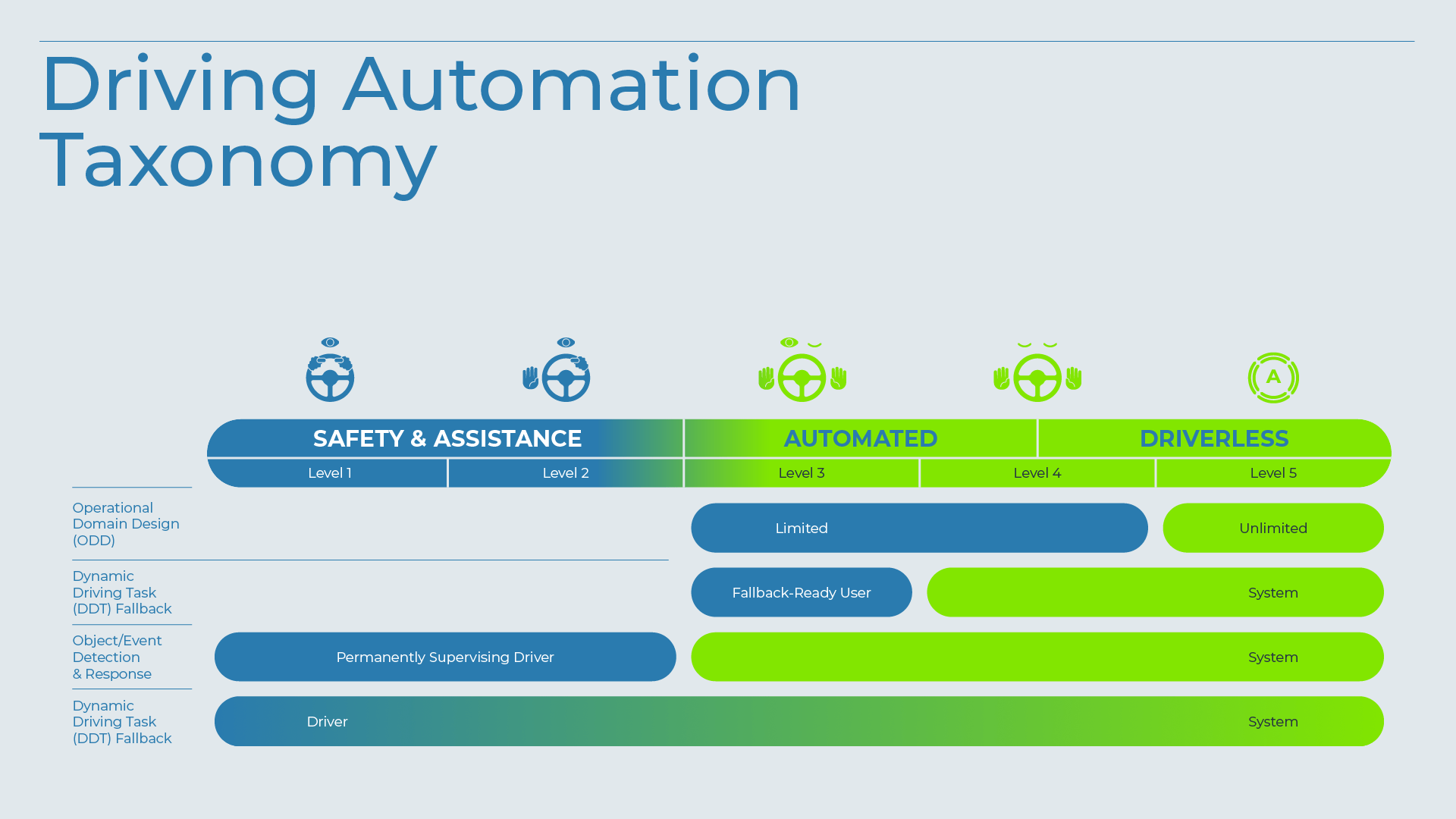
To manage the technical and legal transition, the industry follows the SAE (Society of Automotive Engineers) framework, which tracks the delegation of tasks from the human to the machine.

Levels 1-2: Assisted Driving

  • Level 1: The system assists with either steering OR speed (e.g., Adaptive Cruise Control). The human is the primary driver.
  • Level 2: The system provides simultaneous support for steering and speed (e.g., Highway Assist). This is the current “sweet spot” for mass-market vehicles. However, it is strictly “eyes-on” and often “hands-on”: the driver must monitor the road at all times.

Level 3: Automated Driving

  • Level 3 (Conditional Automation): The “eyes-off” threshold. In specific scenarios (like highway traffic jams), the car takes full control. The driver can engage in other activities but must remain “fallback ready” to take back control within a few seconds when prompted. This is a major legal jump, as the manufacturer assumes liability while the system is active.

Levels 4-5 : Autonomous Driving

  • Level 4 (High Automation): The “mind-off” level. Within a defined “Operational Design Domain” (ODD), the car requires no human intervention. If it encounters a problem it can’t solve, it performs a “minimal risk maneuver” (like pulling over) rather than asking the human for help. This is the level required for Robotaxis.
  • Level 5 (Full Automation): The ultimate goal, a vehicle that can drive anywhere, anytime, in any weather, with no need for human controls like a steering wheel.


How are different regions approaching autonomous vehicles?

The development of autonomous vehicles has become a global race between three major regions:

  • China: Driven by a national strategy to lead in smart mobility. BYD, the world’s largest EV manufacturer, recently unveiled its “Eye of God” (DiPilot) system, aiming to standardize Level 2+ and Level 3 features across millions of mass-market vehicles. Geely Auto an international automobile manufacturer, announced an advance from “Full-Domain AI 1.0” to 2.0, while officially launching the G-ASD intelligent driving system to accelerate the transition to high-level autonomous driving. Tech giants like Huawei are also deep-integrating AI stacks into domestic brands.
     
  • The United States: Defined by Silicon Valley disruption. Tesla continues to push its vision-only “Full Self-Driving” (FSD) approach, while General Motors (GM) and Ford expand “supervised” autonomy via Super Cruise and BlueCruise.
     
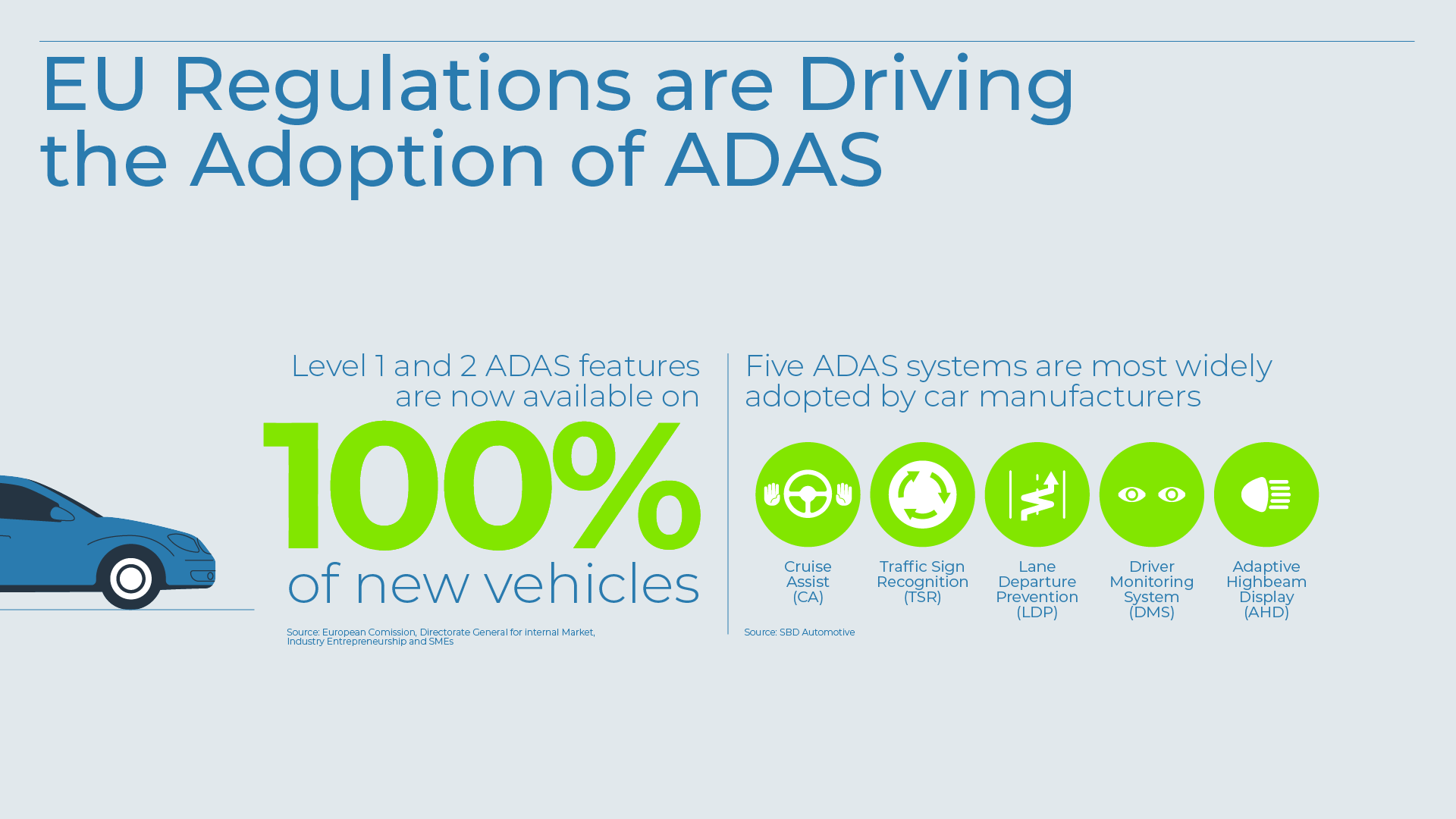
  • Europe: Leads in safety-first regulation. The General Safety Regulation (GSR2), effective as of July 2024, mandates Advanced Driver Assistance Systems (ADAS) in all new vehicles, setting a high bar for market entry. In 2001 Mercedes-Benz announced that the model S-Class is capable of reaching Level 3 automation equipped with LiDAR, the second-generation Valeo SCALA™. In 2022, BMW Group and Valeo announced their cooperation for the co-development of fully automated parking technologies up to Level 4 (fully automated driving/parking, with no supervision needed by the driver) for the next generation modular platform for the BMW vehicles.

Beyond private ownership, a new vertical is emerging: the Robotaxi. Representing the commercial vanguard of high-level autonomy, Robotaxis operate as “Mobility as a Service” (MaaS). Companies like Waymo and Tesla in the US (Atlanta, Austin, Dallas, Houston, Los Angeles, Miami, Orlando, Phoenix, San Antonio et San Francisco), and WeRide, PonyAI and Apollo Go – Baidu in China (Beijing, Shanghai, Guangzhou et Shenzhen), have transitioned from pilot programs to commercial ride-hailing. By removing the cost of a human driver, which accounts for the majority of a ride-hailing fare, Robotaxis promise to offer mobility at a lower price point than private car ownership, fundamentally altering urban navigation.

What benefits does the autonomous vehicle offer consumers?

Valeo’s Vision: the three pillars of benefit (Safe – Free – Sustainable)

Valeo’s vision for the future of mobility is built upon three core pillars that address the inherent flaws of our current transportation model, a model that is historically dangerous, time-consuming, and environmentally inefficient.

Pillar 1: Safe (Vision Zero)

The most profound functionality offered to the consumer is safety. Globally, over 1.3 million people die in road accidents annually, over 90% of which are caused by human error (distraction, fatigue, or impairment). An autonomous vehicle provides a “digital safety net.” It does not get distracted by a smartphone, it does not get tired, and it has a 360-degree field of vision with no blind spots. By removing the “human factor,” we move toward “Vision Zero“, a world where road fatalities are eliminated.

Pillar 2: Free (Time)

In an autonomous world, the “driver” is transformed into a “user.” For the average commuter spending an hour a day in traffic, autonomy returns roughly 250 hours a year of productive or restful time.

  • The Third Living Space: The interior of the car is being reimagined. With the steering wheel retracted and seats rotatable, the cabin becomes a mobile office, a relaxation lounge, or an entertainment suite.
  • Stress Reduction: Autonomy frees the user from the cognitive load of navigating heavy traffic or searching for parking, significantly improving mental well-being and productivity.

Pillar 3: Sustainable (Sustainability and Urban Space)

The current model of car ownership is wasteful; most vehicles sit idle for 95% of their lives.

  • Shared Mobility: Fully automated fleets can operate at much higher utilization rates, potentially reducing the total number of vehicles on the road by up to 80% in urban centers.
  • Eco-Driving: Autonomous systems optimize routing and speed to minimize energy consumption. When paired with electrification, the carbon footprint of transport collapses.
  • Reclaiming the City: As cars become capable of parking themselves in remote hubs, cities can reclaim up to 30% of their land currently dedicated to parking, converting lots into green spaces and housing.

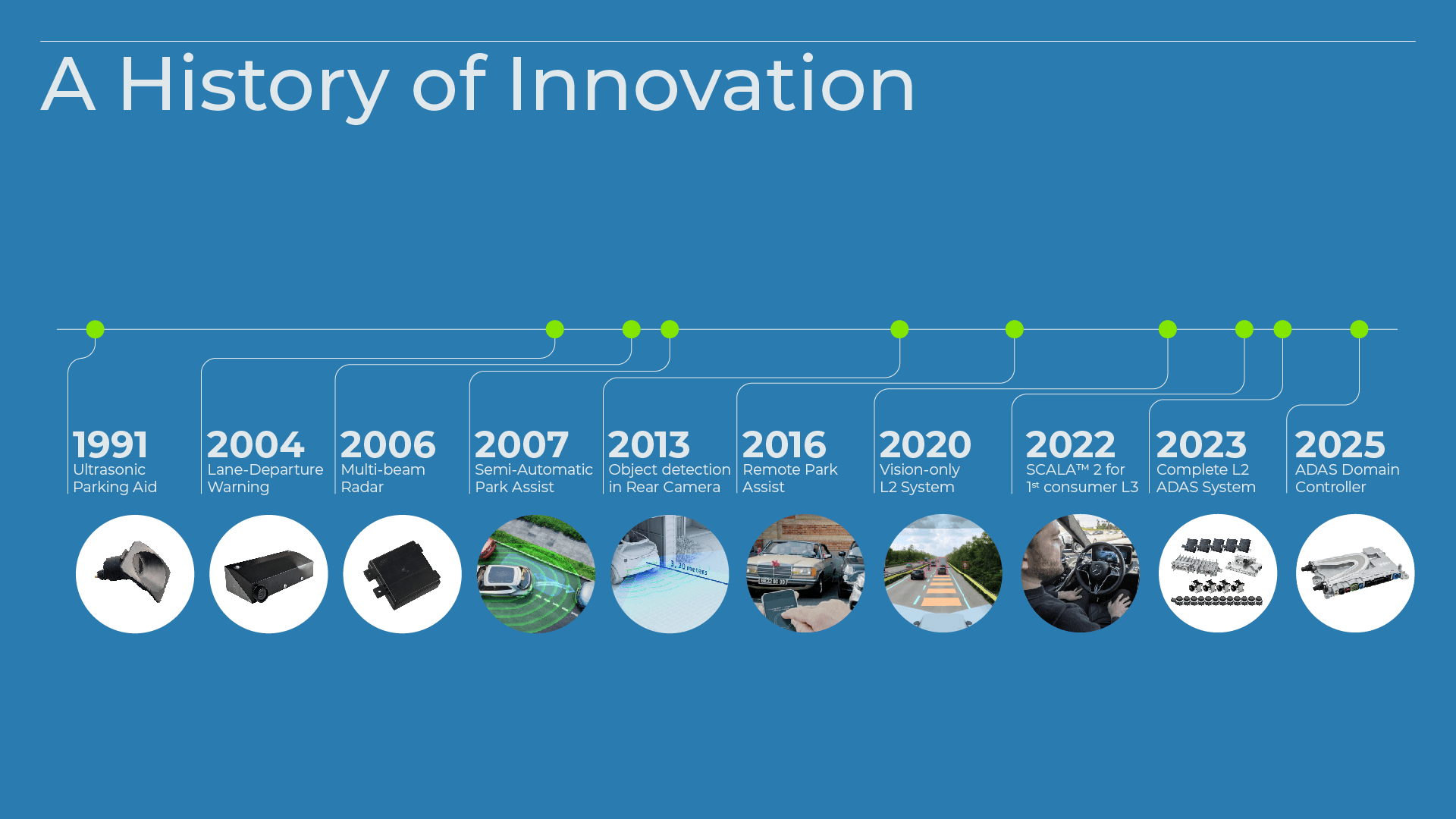
35 years of innovation in Driving Automation

History of autonomous car innovation

How do we make vehicles autonomous?

What are the core technologies behind autonomous vehicles?

Making a vehicle autonomous requires a sophisticateyéd architecture that mimics and exceeds human biological functions. Valeo’s portfolio provides a full-stack solution: Sensors, Compute, and Software (SW) → Systems.

Step 1 Sense: sensors and perception

An AV needs a multi-modal sensor suite to achieve Perceptual Redundancy. If one sensor is blinded, another provides the missing data:

  • Cameras: High-resolution sensors that provide semantic understanding (reading signs, traffic lights).
  • Radar: Exceptional at detecting speed and distance, even in fog or rain.
  • LiDAR (The Critical Breakthrough): Uses laser pulses to create a precise 3D map. In 2017, Valeo became the first to mass-produce automotive-grade LiDAR with its SCALA family, providing the absolute precision needed for Level 3 and 4 systems.

Step 2 Understand: AI, compute and sensor fusion

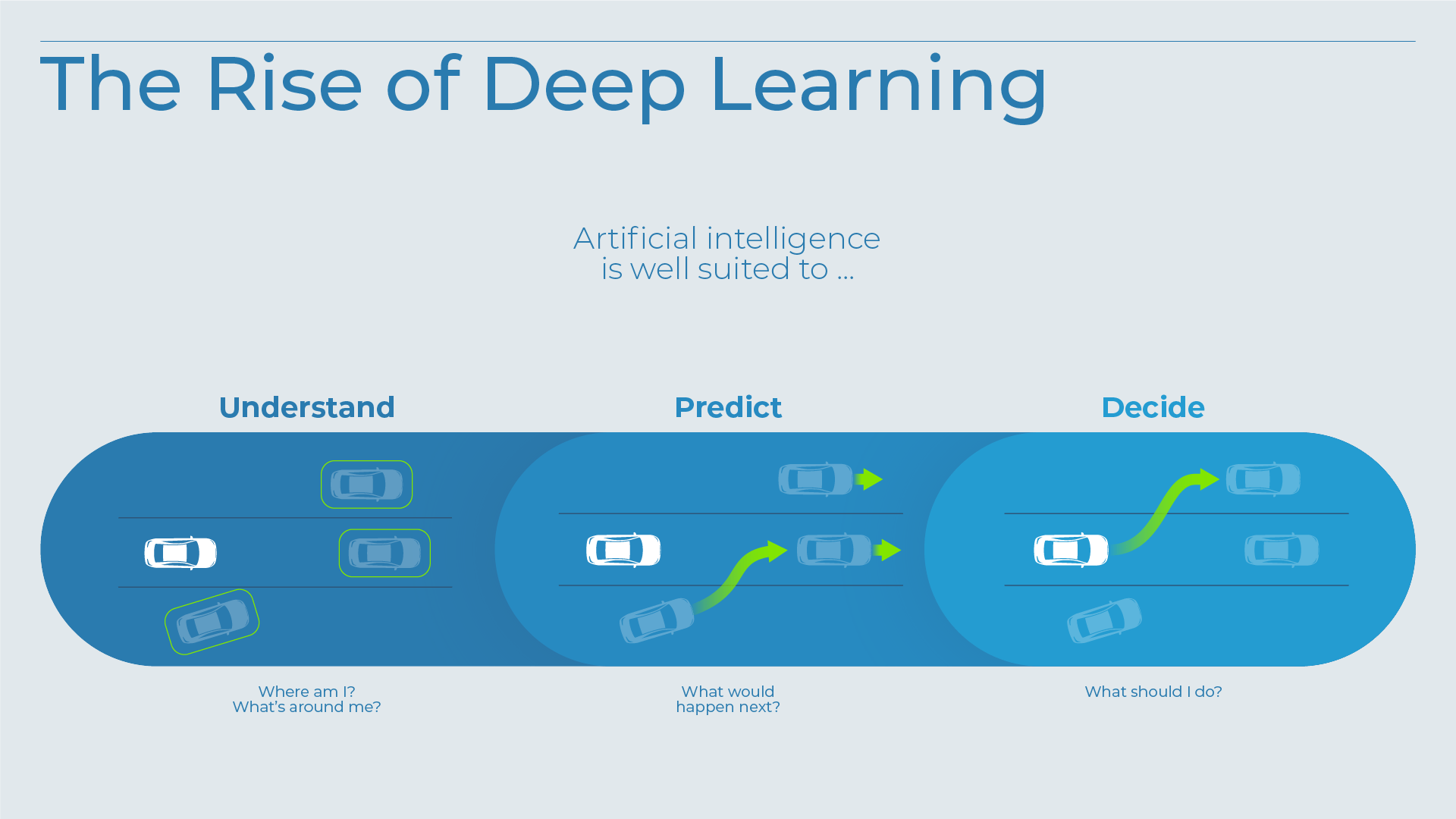
The “brain” of the vehicle is a high-performance computer, an AI Domain Controller. Through Sensor Fusion, these disparate data streams are merged into a single “truth.” Modern architectures use End-to-End Deep Learning, where neural networks learn from millions of miles of driving data to predict the behavior of other road users and plan the optimal path.

Step 3 Driving behavior: motion planning and vehicle control

The digital plan is translated into physical motion via Drive-by-Wire systems. The vehicle’s behavior must be “human-like”, predictable and smooth, to ensure passenger comfort and public trust. Adaptive Motion Planning ensures the car handles turns and braking with a “jerk-limited” trajectory, avoiding the mechanical feel of early prototypes.


How to ensure that the Autonomous Vehicle increases road safety?

Technical and regulatory solutions

The safety gains of autonomy are not automatic; they require a rigorous combination of engineering and legislation.

Global regulatory frameworks (EU, US, China)

Governments are shifting from voluntary safety guidelines to mandatory hardware and software performance standards to ensure that automated features deliver on their safety promises.
 

  • European Union (GSR2): The General Safety Regulation (GSR2) acts as a blueprint for global safety. Mandates include Intelligent Speed Assistance (ISA), Autonomous Emergency Braking (AEB), and Advanced Driver Distraction Warning (ADDW) (effective 2026), which uses interior cameras to monitor driver inattention.

EU regulations and ADAS

  • United States (FMVSS 127): The National Highway Traffic Safety Administration (NHTSA) has recently introduced Federal Motor Vehicle Safety Standard (FMVSS) 127. This regulation mandates that nearly all new passenger vehicles must be equipped with Automatic Emergency Braking (AEB) capable of stopping the vehicle to avoid a collision with a pedestrian at speeds up to 45 mph (73 km/h). This standard marks a significant transition from voluntary industry commitments to a rigorous federal mandate, focusing on high-speed safety and pedestrian protection.
     
  • China (New Guidelines): Regulatory bodies have issued new guidelines requiring stricter “driver-in-the-loop” monitoring for Level 2 systems and mandatory over-the-air (OTA) logging for safety analysis. There is a renewed focus on ensuring that “Autopilot” marketing does not mislead consumers, emphasizing that Level 2 remains an assistance feature requiring human vigilance. This clarification has as a side effect to accelerate the development of Level 3 systems that will be advertised as true autonomous systems. This clarity will, in turn, speed up the introduction of Level 3 systems, which will be promoted as genuinely autonomous.

Technical Robustness: explainable AI and traceability

For a vehicle to be road-legal, its decision making process is “traceable and explainable” that is to say that for each action we need to see what contributed to the decision it took (traceable) and then what led to the decisions (explainable). Valeo is engaged in developing “Explainable AI” frameworks. Unlike “black box” systems, these architectures include a deterministic “Safety Monitor” layer. This monitor acts as a final filter, ensuring that the AI’s decisions never violate traffic laws or basic safety protocols, providing an audit trail for every maneuver.

How can the benefits of autonomous mobility be made available to all?
Facilitating democratization to maximize society benefits

To maximize the societal benefits of the “Safe – Free – Sustainable” pillars, the technology must be democratized beyond luxury segments.

The Software-Defined Vehicle (SDV) and lifecycle management

The transition to the Software-Defined Vehicle (SDV) is the key to democratization. In the past, a car’s features were fixed at the factory. In the SDV era:

  • Upgradability: Through Over-the-Air (OTA) updates, a car can receive new safety features long after purchase.
  • Subscription Models: Users can “unlock” autonomous features as needed, for example, subscribing to a “Highway Pilot” only for a summer road trip. This lowers the initial purchase price of the vehicle.
  • Hardware Headroom: By equipping mass-market cars with “headroom” in computing power and sensors, manufacturers ensure that the hardware remains relevant for a decade or more.

Economies of Scale

As a world leader, Valeo uses its massive production scale to drive down the cost of components like LiDAR and high-compute chips. By making these systems affordable for entry-level vehicles, the safety benefits of ADAS reach the widest possible population.

Driving the future of safe, free and sustainable mobility

We are at the dawn of a new era. The journey toward full autonomy is not just an engineering challenge, it is a profound opportunity to redesign our society. Through the “Safe – Free – Sustainable” vision, and the tireless innovation of leaders like Valeo, the vehicle of the future will move us toward a better quality of life, for everyone, everywhere.