
ELECTRIFICATION
10 November 2026
13 min
Electrification

- What is vehicle electrification?
- From combustion to fully electric: the industrial transition
- Valeo & electrification
- Understanding vehicle electrification and electric vehicles
- Valeo’s vision and expertise in vehicle electrification
- The core technologies enabling electric mobility and their benefits
- Power electronics at the heart of energy conversion and control
- Thermal management as a strategic lever for range, performance and safety
- Regenerative braking and energy recovery strategies
- Low-voltage, 48V and high-voltage, architectures compared
- Benefits, challenges and environmental impact
- The environmental impact of electric vehicles across their lifecycle
- Sustainability, eco design and circularity in electric powertrains
- Frequently asked questions about electric vehicles and electrification
Decarbonization is no longer an option. The automotive industry has to adapt by shifting to the different solutions of vehicle electrification, from mild hybrids to full hybrids, plug-in hybrids, range-extender electric vehicles, and pure battery or fuel cell electric vehicles. The transition also includes changes in vehicle architecture, towards software defined vehicles, new platforms and a shift to all-new technologies. It’s a revolution, in fact.
What is vehicle electrification?
Vehicle electrification is the integration of an electric motor in the powertrain in order to reduce CO2 emissions. There are several levels of vehicle electrification:
- Low-voltage, starting from 12V but mainly in 48V, for mild hybrids;
- High-voltage, such as 400V and 800V, for full hybrids, plug-in hybrids, range-extender electric vehicles, and pure battery or fuel cell electric vehicles.
From combustion to fully electric: the industrial transition
The long legacy of the automotive industry’s know-how in internal combustion engines (ICE) is shifting to a new world of technologies leading to full electrification. Themulti-path approach combines ICE and several levels of hybridization, as well as pure battery electric vehicles (BEV).
Valeo accompanies this technical transition by developing comprehensive powertrain and thermal management solutions to support the evolution of both conventional and electric vehicles.

Valeo & electrification
Valeo transforms complex technologies into reliable, efficient, and affordable solutions for mobility and beyond in every region of the world. Valeo Power Division has 93 production sites and 27 research and development centers. It employs over 40,800 employees worldwide.
Based on Valeo’s strong know-how and competence in alternators, the company started to work more than 20 years ago on the first electrification solution with the 12V belt starter generator (iStARS). Today, one-third of vehicles worldwide are equipped with a Valeo solution for electrification. Valeo also produces complete electric powertrains and thermal management systems for hybrids and pure electric vehicles.
Understanding vehicle electrification and electric vehicles
What are the main components of vehicle electrification?
In the different levels of electrification, the electric motor is the muscles, supporting the internal combustion engine in the case of hybrids, or moving the vehicle in the case of pure electric vehicles.
They are accompanied by different technical elements:
- Inverters, the brain that controls the electric motor;
- DC/DC converters, used to ensure the energy transfer between the two electrical networks, for example the car radio and the wipers, remain in 12V;
- On board chargers in the case of plug-in hybrids or pure electric vehicles to charge the battery pack;
- Reducers, the equivalent of a gearbox for an electric powertrain.
Offering all of these solutions, Valeo is able to provide complete electric powertrains for hybrids or pure electric vehicles.
Furthermore, when a plug-in hybrid or hybrid vehicle operates in pure electric mode, the internal combustion engine is turned off and can no longer be used as a heat source. The major challenge is to maintain passenger comfort while ensuring optimal thermal management of the powertrain, especially the battery, to maintain performance and maximize driving range.
To address this, Valeo provides dedicated thermal management solutions:
- Heat Pumps and Electric Compressors (EDC), which efficiently circulate refrigerant to cool the vehicle or capture ambient heat to warm it with minimal energy consumption;
- HVAC systems, managing air distribution and temperature inside the vehicle for optimal occupant comfort;
- Front Cooling Modules, controlling front air intake and heat exchange for the battery and powertrain cooling circuits;
- High-Voltage Coolant Heaters (HVCH), acting as powerful electric heaters to warm up the cabin and battery in cold weather.
By mastering both electric powertrains and thermal management systems, Valeo is uniquely positioned in the industry. This dual expertise enables Valeo to manage vehicle energy holistically, seamlessly balancing mechanical, electrical, and thermal energy to maximize efficiency, performance, and range.

How an electrified vehicle works: from the battery to the wheels
According to the level of electrification, the electric motor can have different functions, from supporting the internal combustion engine, up to partial or full capacity to move the vehicle.
The different types of electrified vehicles and their role in the transition:
Stop-Start as first-level of CO2 emissions reduction
This avant-garde affordable innovation was, over 20 years ago, Valeo’s first major move into vehicle electrification. It has since become an absolute market standard. It comes from a simple idea: a vehicle is stationary around 35% of the time in the traffic, its engine should be turned off in that case, just as a light should be switched off when leaving a room. The result at the time is around 5% reduction in CO2 emissions and fuel consumption on official combined cycles.
48V mild hybrid (MHEV) as an entry point to electrification
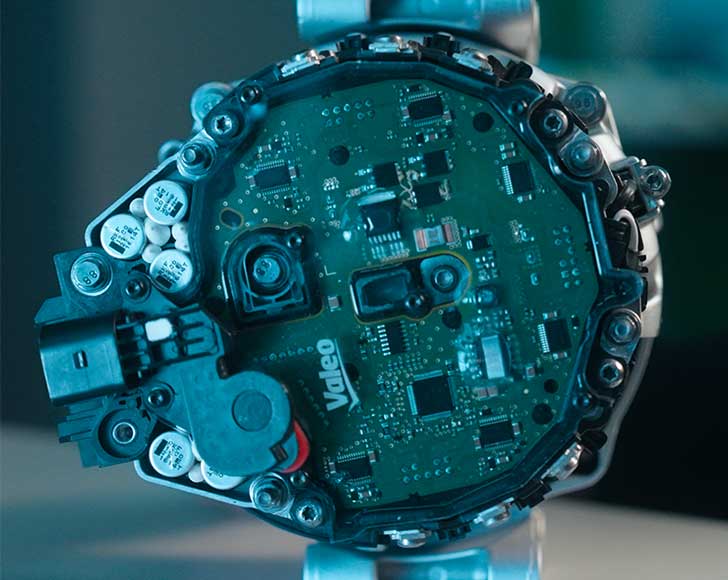
A 48V mild hybrid system is a hybrid electric vehicle technology that uses a 48V electrical system in addition to the conventional 12V system. It typically includes a 48V lithium-ion battery, a belt-driven integrated starter-generator and a 48V to 12V DC/DC converter.

Cars with 48V technology have many advantages compared to high-voltage systems:
- Weight reduction
- Small size: no impact on interior space
- Affordability: less expensive than a full hybrid system
- Fuel efficiency: reduction of fuel consumption and thus CO2 emissions by up to 15% (between the gains of a simple stop-start system and a complete mild hybrid system combining a 48V belt starter generator and a 48V electric motor integrated either in the gearbox or on the rear axle of the vehicle)
The Valeo 48V powertrain system architecture is a hybridization solution allowing significant gains and suited to all types of vehicles. The 48V 25kW water-cooled electric motor can also be positioned on the rear axle of the vehicle to provide an electric 4WD (four-wheel drive) function and enhance the driving experience.

Full hybrid (HEV) and plug-in hybrid (PHEV) powertrains
In full hybrid and plug-in hybrid powertrains, the electric motor alone is able to power the car in certain conditions. The motor contributes in both cases to reduce the fuel consumption and therefore, the CO2 emissions of the vehicle. This electrification level allows to keep a long total range thanks to the ICE engine and a great versatility on the road.

- Full hybrid electric vehicles (HEV) combine an internal combustion engine and high-voltage electric motors (up to 3), together with a small lithium-ion battery, an inverter and a DC/DC converter. While driving in the city, it allows some EV driving, especially in traffic jams or while maneuvering at low speed. The total CO2 benefit on a driving cycle can be up to 20% less, and even up to 30% less combined with downsizing the internal combustion engine.

- Plug-in hybrid electric vehicles (PHEV) combine an internal combustion engine and high-voltage electric motor (up to 3), together with a big lithium-ion battery, an inverter, a DC/DC converter and an onboard charger. It allows between 50 and 200 km of EV driving, according to the battery size, and the total CO2 benefit on a driving cycle can be up to 70% less.
Valeo produces electric motors, inverters, DC/DC converters, onboard chargers, reducers, and battery pack assembly solutions, as well as complete thermal management systems covering cabin comfort, powertrain, and battery cooling.
Battery electric vehicles (BEV)
Battery electric vehicles are 100% electric, moved only by one or more electric motors powered by a big lithium-ion battery. They need to be charged on private or public chargers, using AC or DC power, the latter for a fast charging session.

They use one high-voltage electric axle or more, including an electric motor, its inverter and reducer, a DC/DC converter, an on board charger and a big lithium-ion battery. They can provide up to approximately 1,000 km of pure electric WLTP range for the most performant models, with zero CO2 emissions.

Valeo produces electric axles, electric motors, inverters, reducers, DC/DC converters, on board chargers and battery packs and thermal systems including heat pumps, battery coolers, eCompressors, e-coolant heaters, e-air heaters, heating ventilating and air conditioning modules for battery cooling and cabin climate.
Fuel cell electric vehicles (FCEV)
A fuel cell electric vehicle (FCEV) is an electric vehicle powered by a fuel cell using hydrogen and oxygen to create its own electricity, instead of having it stored in a battery. Valeo produces electric axles, electric motors, air compressors, high pressure regulators, receptacles, manifolds, recirculation blowers, shut off valves.
Range-extended electric vehicles (REEV)
The range-extended electric vehicles (REEV) are primarily electric vehicles that also benefit from an embedded ICE engine that supports if the battery is depleted. The ICE is used through the electric motor to charge the battery while driving. They use a much bigger battery and a stronger electric motor than PHEVs.

Valeo produces electric axles, electric motors, dual inverters, reducers, DC/DC converters, onboard chargers, battery packs and thermal systems including heat pumps, battery coolers, e-compressors, e-coolant heaters, e-air heaters, heating ventilating and air conditioning for battery cooling and cabin climate.
Valeo’s vision and expertise in vehicle electrification
The world market share of New Energy Vehicles (100% electric and plug-in hybrids) is growing steadily, from 20% in 2024 to an expected 36% in 2028, and more than 40% in 2030.
Valeo is deeply involved in all the different levels of electrification, from 48V mild hybrid systems to high-efficiency permanent magnet e-motors, power electronics, electric axles, actuators, sensors and transmissions. Valeo is a world leader of high and low-voltage electric powertrain solutions and in thermal management systems that ensure the performance and range of electric vehicles. A third of the existing vehicles in the world are equipped with Valeo solutions for electrification, consolidating its position as a global leader in key vehicle technologies.
The Valeo Power division is set to experience significant growth, driven by the accelerating shift towards electrification. Valeo offers a comprehensive product portfolio covering all types of electrified powertrains, whilst benefiting from a competitive global footprint in production and development.
Innovation is at the heart of Valeo’s strategy, number one among French patent applicants across all technology sectors at the European Patent Office (EPO), with 650 applications in 2025 (+20.1% compared with 2024). Valeo is also included in the LexisNexis Top 100 Global Innovators 2026 ranking.
The Valeo Group is ideally placed to meet the needs of the cars of tomorrow – electrified, safer and with a centralized software architecture.
The core technologies enabling electric mobility and their benefits
Electric motors and electric axles (eAxles) as the new heart of the vehicle
Integrated eAxle architectures
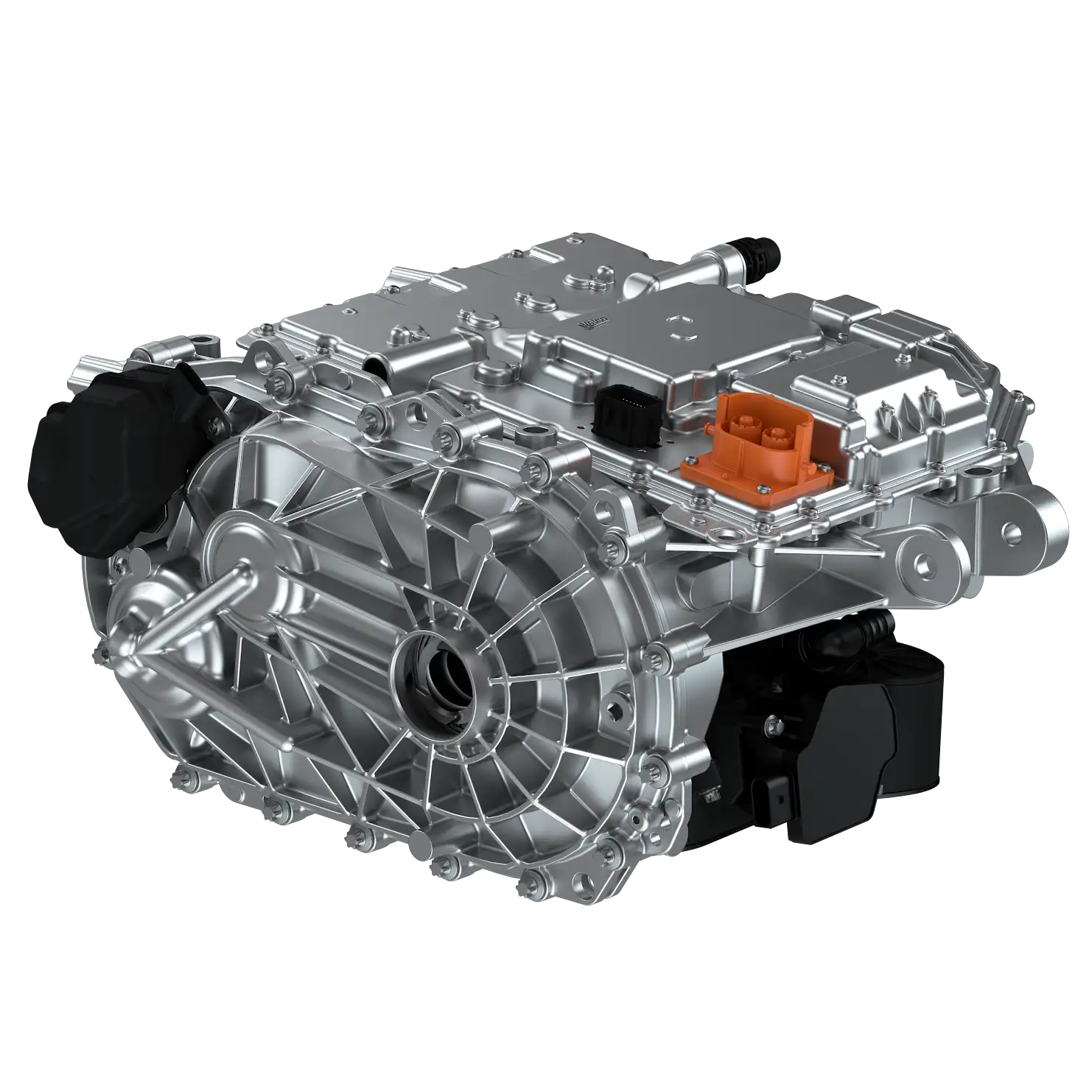
The high-voltage 3-in-1 eAxle (electric Axle) is the combination of an electric motor, inverter and reducer highly integrated together in a shared packaging: the heart of the powertrain. This is a compact solution for electric vehicles and hybrid vehicles as primary and/or secondary electric axles, saving space and cost.
Compatible with both 400V and 800V architectures and offering scalable power up to 350 kW, this fully integrated system delivers great NVH behaviour and excellent efficiency. Park lock system, differential and disconnect unit are available as options.
Compact and high-efficiency electric motor design
All Valeo electric motors are designed for the easiest integration, with a compact housing and high efficiency leading to an optimized electrification solution, being used for different vehicle segments and types.
Two-speed eAxle technologies
Valeo 48V two-speed disconnectable eAxle offers an affordable electrified 4WD drivetrain solution. The system addresses the European emissions targets by replacing mechanical components with an electric rear axle. This world unique 48V dual-speed system delivers 1,800 Nm of maximum torque on the rear wheels, democratizing high-performance power.

Rare earth-free and magnet-free motor solutions
In 2022, Valeo launched the development of next-generation Electrically Excited Synchronous Motors (EESM), an electric motor without magnets that eliminates reliance on rare earth elements. Evolving this technology, Valeo partnered with MAHLE to introduce the iBEE (inner Brushless Electrical Excitation) system. This advanced motor achieves a maximum power of 350 kW while reducing the motor’s length by 50 mm.
This new iBEE motor offers a carbon footprint reduced by 40% versus standard PMSM (Permanent Magnet Synchronous Motor) solutions. Through optimized rotor controls and thermal management, it surpasses the peak torque of permanent magnet motors, ensuring exceptional efficiency for premium, long-range electric vehicles.
Power electronics at the heart of energy conversion and control

Inverters and the impact of silicon carbide (SiC) technology
The inverter is the brain at the heart of the powertrain, controlling the electric motor. It converts Direct Current (DC) from the battery to Alternative Current (AC) to power the electric motor. It can also be used in reverse mode to charge the battery by transforming kinetic energy from the vehicle into electrical energy that can be stored in the battery.
Valeo inverters are based on a scalable platform able to suit Si or SiC, for 400V and 800V. It is based on a highly standardized hardware and software architecture.
SiC enables low-loss power conversion under high-voltage conditions. Our fifth-generation inverter, featuring SiC technology, improves efficiency, particularly for applications above 150 kW. This inverter is compatible with 400 and 800V tension levels.

On board chargers (OBC) and DC-DC converters
The electric vehicle on board charger converts alternative current available on the grid into direct current that can charge the vehicle’s battery. Almost all the energy charged in the vehicle is flowing through the onboard charger’s power electronics.
Valeo is continuously improving the performances and the functionalities of its on board chargers, mass produced since 2014. Valeo is currently proposing its 4th generation based on a standard bi-directional scalable platform up to 22 kW and able to ensure a worldwide compatibility to address all cars and countries requirements (400-800V batteries, 1 or 3-phase network).
The high-voltage DC/DC converter is a reversible electronic device which lowers the direct current from the high-voltage battery to a low-voltage direct current used by most of the vehicle electrical equipments (e.g. dashboard, electric windows…). The DC/DC converter is also in charge of keeping the passengers safe by insulating them from the high-voltage electricity network.
Bidirectional charging and V2G, V2L, V2H use cases
The electric vehicle is no longer only about transportation, it is becoming an active participant in the energy ecosystem. Valeo’s Vehicle to Grid (V2G) bi-directional charging technology allows compatible electric vehicles to become mobile energy reservoirs and supply power to the wider grid.
Instead of just delivering power, the charging station enables the car and the grid to communicate with each other in real-time, sharing energy data to optimize charging costs and safely manage bi-directional energy flows. By enabling electric vehicles to seamlessly feed energy back into the grid or buildings during peak demand, Valeo transforms the traditional charging point into an active, cost-effective hub for energy transition.
The V2L function (Vehicle to Load) allows electric vehicles to use their battery to power external electronic devices and household appliances through a special adapter. The same principle is used for V2H (Vehicle to Home), using the stored electricity in the car’s battery to power a home as a back-up or for an intelligent supply when electricity costs are at high peaks.
Thermal management as a strategic lever for range, performance and safety

Battery cooling and conditioning systems
High-voltage batteries are expensive and highly sensitive to temperature variations, whether the vehicle is parked, driving, or charging.
Valeo designs and manufactures compact, cost-competitive Battery Thermal Management (BTM) solutions, (refrigerant-based and liquid-based) for different battery pack and battery cell formats (prismatic or cylindrical).
Valeo’s BTM systems are designed to be compatible with natural refrigerants such as R290 (propane) and R744 (carbon dioxide), helping reduce environmental impact.
Beyond battery cooling, these systems also enable battery thermal preconditioning ahead of charging sessions, optimizing charging performance and reducing charging time.
Heat pump technologies for efficient cabin and powertrain heating
A heat pump is the evolution of the Air Conditioning (A/C) system: it is now able to cool the cabin and to warm it, using the thermodynamic cycle of a refrigerant gas.
By using natural refrigerants like R744 (CO₂) and R290 (propane), these systems deliver an ultra-low Global Warming Potential (GWP) without relying on PFAS-based refrigerants or generating TFA through refrigerant degradation, while delivering superior thermodynamic efficiency, especially for cabin heating in extreme cold conditions. Valeo proposes a new design of heat pumps that are compact and centralized, integrating the refrigerant loop and the coolant loop in a single module.
Thermal safety and runaway prevention in electrified systems
Thermal runaway occurs when the temperature of the EV battery reaches a critical state. Thermal runaway sensors ensure thermal runaway detection. Valeo offers a range of sensors combining measurement and detection of several gas types inside the battery to address the evolution of regulations, in particular regarding the safety of electric vehicles batteries.
Software driven thermal and energy optimization
Valeo’s smart thermal management software optimizes energy efficiency in real time, across all seasons, leveraging cloud connectivity. Valeo Predict4Range can help recover up to 24% of electric driving range.
Thermal performance can be further enhanced through immersive battery cooling technology, using a dielectric fluid to improve battery performance, thermal stability, and safety.
Advanced cabin thermal comfort and air quality solutions
Valeo offers a full range of HVAC systems delivering ventilation from one to six zones in the vehicle, offering an excellent level of comfort and personalization, with individual temperature adjustment for each vehicle zone. Operating in synergy with natural, climate-friendly refrigerants like R290 (propane) and R744 (carbon dioxide) ensures that this thermal comfort does not compromise sustainability.
Personalizable controls to improve air quality inside the cabin are also available: a fragrance diffuser to create a relaxing or reviving atmosphere, an air purifier featuring an ionizer to eliminate unpleasant odors and create a calming environment, and an anti-allergen cabin filter to neutralize allergens carried in with pollens.
Regenerative braking and energy recovery strategies
Regenerative deceleration and braking capture kinetic energy during deceleration and convert it back into storable electrical energy. When the driver lets off the accelerator or applies the brake pedal, the electric motor reverses its standard operation to act as a generator. Instead of consuming power to propel the wheels, it uses the vehicle’s forward momentum to generate electricity, seamlessly feeding it back into the high-voltage battery. The mechanical resistance created by this generation process actively slows the vehicle down, which not only extends the driving range but also significantly reduces wear on traditional friction brakes.
Low-voltage, 48V and high-voltage, architectures compared
A low-voltage architecture (12V) is typically based on a reinforced starter or a belt starter alternator installed in place of an alternator. The combustion engine is started immediately and silently, thanks to the reinforced starter or through the belt that permanently links the system to the crankshaft. This is the first step of CO2 emissions reduction with the Stop and Start function.
A 48V mild hybrid system is a mild hybrid electric vehicle technology that uses a 48V electrical system in addition to the conventional 12V system found in most cars. The 48V system typically includes a 48V lithium-ion battery, an integrated belt-driven starter-generator – in place of the alternator – a DC/DC converter and, in some more advanced architectures, an additional 48V electric motor located in the gearbox or on the rear axle. Still very compact, it reduces the fuel consumption and thus the CO2 emissions by up to 15% versus a conventional Stop Start system.
High-voltage is used in full hybrid, plug-in hybrid and battery electric vehicles. Battery electric vehicles can use a range of high-voltage electric motors starting with a full electric axle system (motor + inverter + reducer) providing 40 kW up to the range of a full 350 kW for the most powerful motor, catering to requirements across the entire existing electric vehicle market, from light cars to premium sedans, and even the largest SUVs or Light Commercial Vehicles.
Benefits, challenges and environmental impact
The benefits of electrification for drivers, fleets and cities
Electrification sets a virtuous circle that has an impact at all levels. For drivers, peace of mind while driving an electric vehicle, automatic and full of torque, with lower noise levels compared with internal combustion engine vehicles, is a very positive experience. They also benefit from lower energy costs, as well as lower maintenance costs.

For fleets, the Total Cost of Ownership (TCO) is significantly reduced compared to ICE vehicles, while corporate sustainability of companies is enhanced and employees can appreciate the unique driving experience offered by BEVs.
In the city, the reduction of pollution levels is a major step, with cleaner air and less noise leading to better health for inhabitants and commuters. The smart grid integrates electric cars into the whole electric ecosystem.
The environmental impact of electric vehicles across their lifecycle
Battery electric vehicles start their life with a deficit in environmental impact due to the manufacturing of their high-voltage battery. But through their lifetime, they can offset this as they avoid fossil fuels. Switching from internal combustion engines to electric powertrains drastically reduces these emissions, as the electricity used to charge the vehicle is itself low-carbon. And while driving, BEVs do not produce CO2 emissions or direct pollution.
Sustainability, eco design and circularity in electric powertrains
In 2023, Valeo Group launched the 4R program: ROBUST DESIGN, REPAIR, REMANUFACTURING, RECLYCLE(D) in order to accelerate circular economy. This program aims to bring a change of mindset in design, operations and business.

By designing compact, integrated and rare earth-free electric powertrains, Valeo shows a strong commitment to sustainability. An eco-design that has also the circularity phase in mind, including a disassembly approach in order for the product to be repaired or remanufactured, or for its materials to be recycled.
Valeo is aiming for carbon neutrality by 2050. Its ‘CAP 50’ plan to reduce greenhouse gas emissions includes, in particular, a circular economy strategy. This commendable approach applies equally to the Group’s industrial sites, its products and its business model. The automotive supplier also relies on an ecosystem of innovative partners to promote refurbishment, repair, reuse and recycling. This represents a major new growth area, which is essential in an industry undergoing rapid change in the face of the depletion of the planet’s resources.
Frequently asked questions about electric vehicles and electrification
What is vehicle electrification in simple terms?
Vehicle electrification is the integration of an electric motor in the powertrain in order to reduce CO2 emissions. There are several levels of vehicle electrification:
- Low-voltage, mainly in 48V, for mild hybrids;
- High-voltage, 400V and 800V, for full hybrids up to plug-in hybrids, range extenders electric vehicles and pure electric vehicles.
What is the difference between a hybrid, a plug-in hybrid and a fully electric vehicle?
A full hybrid electric vehicle (HEV) combines an internal combustion engine, a high-voltage electric motor and a small battery. While city driving, it allows some EV driving, and the total CO2 reduction on a driving cycle can be up to 20%.
A plug-in hybrid electric vehicle (PHEV) uses a much bigger battery that can be recharged in a charging station or at home. It allows between 50 and 200 km of EV driving, according to the battery size, and the total CO2 reduction on a driving cycle can be up to 70%.
A battery electric vehicle is 100% electric, moved by only one or more electric motors powered by a big Lithium-ion battery. It needs to be charged on private or public chargers, using AC or DC power, the latter for a fast charging session. It can provide approximately between 300 km and 750 km of pure electric WLTP range according to the model, with zero tailpipe CO2 emissions. The electric range of the most performant models on WLTP is up to 1,000 km.
How long does it take to charge an electric vehicle?
The charging time can vary a lot, depending mainly on the type of charger, the charging power acceptable by the car, the total battery capacity and its state of charge at the start of the operation. For a 20 to 80% charge of a 50 kWh battery, on a public high speed DC charging station: 12 to 20 min. If on a 11 kW AC public station, around 2h45, and 4h00 on a 7,4 kWh on a charging box at home.
Are electric vehicles more cost effective than combustion vehicles?
The list price of BEVs is generally superior to their ICE or hybrid equivalent. But the lighter maintenance operations and the charging price, especially at home (the big majority of charging operations) make them eventually cost effective after a number of months or years, depending on these different factors.
How long does an electric vehicle battery last?
The usual warranty offered by the car manufacturers regarding the BEV high-voltage batteries is 8 years, and 70 or 80% of charging capacity at the end of this period, with a maximum of 160,000 km. But studies show that lithium-ion batteries can last much longer without compromising their durability (over 90% of SOH (State Of Health) after 100,000 km for instance).
What is the 80% rule for EV charging?
There are several reasons why it is advised to charge an electric car only up to 80%. The first one is that the charging speed becomes extremely slow, even on a fast charging station, when above this threshold. So it is a loss of time to try to reach more, for the driver and for the other cars waiting to charge in the station. The second reason is durability: the battery will last longer if not charged on a regular basis up to its maximum. The third one is that it will allow some regenerative braking from the start, contributing to driving comfort and a better consumption.
Will all cars be electric by 2035?
The European Commission proposed adjusting the 2035 rules following its regulatory review clause: from 2035 onwards, carmakers will need to comply with a 90% tailpipe emissions reduction target, while the remaining 10% emissions will need to be compensated through the use of low-carbon steel Made in the Union, or from e-fuels and biofuels. This will allow for plug-in hybrids (PHEV), range extenders, mild hybrids, and internal combustion engine vehicles to still play a role beyond 2035, in addition to full electric (BEVs) and hydrogen vehicles.
